Revellata takes Audio-Technica and Optimal to France
Inspired by both Italian and Corsican food and architecture, Revellata bar and restaurant was created by restauranteur Rodolphe Laferrerie. Following the success of his previous establishment, Liberta in Le Mans, Laferriere engaged A/V specialist EMS Le Mans to outfit Revellata’s stunning terraces and central bar.
Read more …
Clair Global Archives website
Marking 60 years in pro audio in 2026, live event production services, integrated permanent solutions and pro audio product manufacturing specialist Clair Global has been actively preserving the history of its people, projects and products for the past three years. To commemorate this milestone, the Clair Global Archives website has launched to offer insights into the company’s beginnings and significant transformation.
Read more …
Nexo books in to new Reykjavík Japanese restaurant
Spanning three floors of a restored Icelandic heritage house dating back to 1907, Reykjavík’s Shiro Japanese restaurant comprises a main restaurant dining room, attic floor Teppanyaki restaurant, private karaoke room and basement bar, all equipped with Nexo ID Series sound installed by local A/V specialist, Exton.
Read more …
Bangkok restaurant installs Optimal sound system
Bangkok’s Japanish restaurant recently installed an Optimal Audio ecosystem, allowing clever zoning control devised by Wasee Karnchawee of Optimal Audio distributor, ProPlugin.
Read more …
Alcons sound supports 2026 SCAD Savannah Film Festival
The 2026 SCAD Savannah Film Festival is being supported by Alcons Audio as Production Partner, bringing its pro-ribbon cinema technology to the SCAD Museum of Art Cinema and the Lucas Theatre for the Arts. Combining existing installations with supplementary systems for the festival, the collaboration puts accurate sound reproduction at the heart of the screening experience, preserving the detail, dynamics and emotional impact of filmmakers’ work.
Read more …
London theatre production uses unorthodox spatialisation
With a revolving two-storey glass house that formed the founding feature of the set for Simon Stone’s The Oresteia at London’s Bridge Theatre, the sound design was never going to be conventional. Nor was it, with TiMax spatialisation.
Read more …
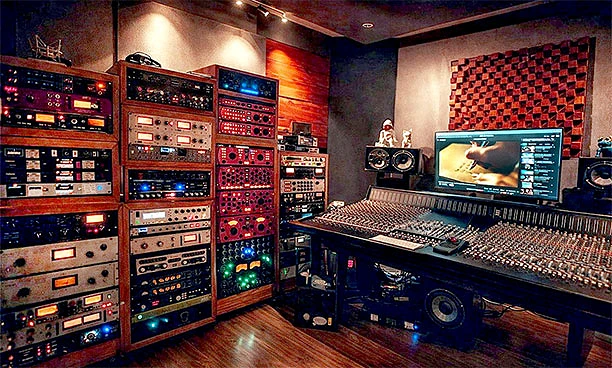


 English-born producer/engineer Adam Moseley got his start at London’s Trident Studios, where he worked with the likes of Phil Ramone, Tom Dowd, Mutt Lange and Steve Lillywhite. Now settled in Downtown Los Angeles, he operates a studio, owns the Accidental Muzik label and is an instructor at UCLA.
 Called the Infinite Cave because of its size, Son Doong is among the world’s biggest caves. Recently, photo journalist Martin Edström led a team that photographed it and recorded the sounds occurring inside it.
 Coming at sound from very different directions, two UK art galleries recently put audio at the forefront of an installation – each making use of contrasting interpretations of sound zoning.
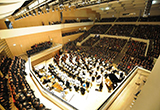 Claiming to be the first orchestra to ‘go fully digital’, the Lille National Orchestra (ONL) is using a digital signal chain from sound pick-up to recording.
  Opened in 1999 to host the Rugby World Cup, Cardiff’s Millennium Stadium has since seen a range of sports events, as well as concerts from the likes of the Manic Street Preachers, U2 and The Rolling Stones staged under its retractable roof.
 While cylinders for Edison’s phonograph were the world’s first consumer music format in the late 1880s, the first music chart preceded them by around 50 years. Having originally represented sheet music sales, the music charts have tracked delivery formats through vinyl, cassette and CD to digital downloads.
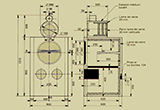 ‘When we started in 1973, there were no loudspeakers, there were no mixers, there were no radio mics, there were no miniature mics that were made specifically for theatre use,’ recalls Autograph Sound Recording’s Andrew Bruce.
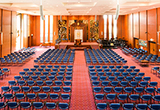 With an increasingly technology-savvy congregation, Melbourne’s Temple Beth Israel is the first synagogue in Australia to stream Shabbat services online. But that same awareness meant that the failing sound system needed to be replaced.
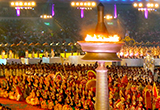 The sound systems required for the Opening and Closing Ceremonies at the recent National Games 2015, held at the Greenfield Stadium in Kerala during February, reflected both the scale and importance of the event.
 Under siege from home recording equipment on one front and new music distribution models on another, as well as being eclipsed by the world of gaming, the wider music business has been forced into increasingly desperate attempts to re-evaluate and reinvent itself.
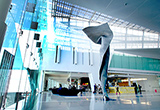 AirVolution is the largest private sector investment in Canberra’s history – a massive $480m redevelopment of the city’s airport that has won it the accolade of Australia’s Airport of the Year.