Ure Marketing takes on IAG brands in the US
Wharfedale Pro and Quad Industrial, the two professional audio brands of International Audio Group (IAG), have announced the appointment of Ure Marketing Inc as exclusive distribution, sales and marketing partner for the US.
Read more …
Finland’s Sibelius Hall upgrades sound with d&b
Finland’s Sibelius Hall has upgraded its sound system with a d&b audiotechnik system. An architecturally and acoustically demanding venue, it has achieved an improved balance of fixed-install reliability with touring-style flexibility.
Read more …
Video Progetti takes on Calrec distribution in Italy
Calrec has appointed Rome/Milan-based broadcast distributor and A/V system integrator Video Progetti as its distribution partner for Italy.
Read more …
Martin Audio joins Hiland Park Baptist Church gatherings
Set in the coastal community of Port St Joe in Florida, Windmark Beach Church is a campus plant of Hiland Park Baptist Church, a major Southern Baptist congregation based in nearby Panama City. Established as a portable ‘church-in-a-box’ set-up, the congregation has now become a permanent facility within the WindMark Village Center . To deliver high-performance sound reinforcement for its modern worship services, the new sanctuary has been equipped with a Martin Audio system, designed, supplied and installed by S&L Integration.
Read more …
Tateside chooses K-Array for DHEF London development
A faith-based charity supporting girls, women and families, operates educational, residential and conference centres across the UK, Dawliffe Hall Educational Foundation (DHEF), recently completed a new development in West London comprising residential accommodation alongside a suite of on-site worship spaces – calling in Tateside to design and deliver the audio systems for these architecturally sensitive areas.
Read more …
Synthesiser Sounds Like This channel launches
Offered to music producers, sound designers and synthesiser enthusiasts ‘looking for genuine sonic inspiration’, Sounds Like This is a dedicated YouTube platform that takes a ‘pure, unvarnished’ look at synth and effect plug-in presets as they sound out of the box.
Read more …




 In 2011, I made a radio documentary for the BBC called The Sound of Sport. Although this was a radio piece, most of what it concerned itself with was television sports sound.
 Three years in the making, a new studio represents the future of China’s recording industry – and a bold move in a superstar’s long-term career plan.
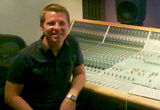 The Audient ASP8024 mixing desk being installed at Ohio’s Capital University is the centrepiece of its Music Technology Area studio. This console was chosen to assist the teaching of signal flow to music technology students of all levels – and the route to its selection is as educational as the reasons behind it.
 It began with a Facebook post made by a well-known (and well liked) US sound engineer/tech/commentator – the vocal feed from a Britney Spears concert originally posted on YouTube with the strap line, ‘what she REALLY sounds like!’
 There is something fitting about the way the glamour and magic of Hollywood is being disturbed by some dark goings-on in commercial cinema.
 John Leckie has produced or engineered records for everyone who’s anyone in rock’n’roll. He’s picked up countless awards and accolades along the way, and been inducted into the Record Producers Hall of Fame by Led Zeppelin’s Jimmy Page.
 Before I discovered the secret world of the recording studio, it was the mystery and promise of early commercial synthesisers that occupied the less engaging moments of my education.
 ‘Old films were made to work with old media. Today’s film directors have too much confidence in the supposed compatibility between mixing rooms.’ Bold and uncompromising, this is a real challenge facing sound in the movie business.
 Thursday was a good day to blog. I had an idea and a collection of notes – I wanted to take a look at the rise of the tablet PC with a nod to its uptake and use in various aspects of pro audio. The launch of the Amazon Kindle Fire, the prominence of the iPad and Steve Jobs’ recent retirement from Apple made it especially timely.
 Visit enough trade shows and it is easy to become blasé about close encounters with truly impressive and groundbreaking kit. Like a good number of you reading this, I have.
 My first look at audio’s use of tablet computers was derailed by news of Steve Jobs’ death. My second has been derailed by word that the subject is to be ably addressed by Pro Sound News Europe… no point covering the same ground.
 Where the original 1979 production of Pink Floyd’s The Wall cost around £1m and was so big that it was only staged in three cities, its 2011 counterpart is reckoned to have cost £37m and has been performed a total of 120 times at venues around North America and Europe.