

One of four live venues across Japan, Umeda Club Quattro has installed a DiGiCo Quantum 338 mixing console supplied by distributor, Hibino, which will also provide full maintenance and support.
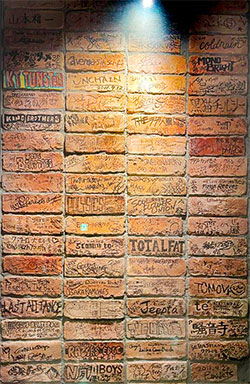
The club originally opened as the Shinsaibashi Club Quattro in 1991 and, after closing in 2011, it reopened in 2012 as Umeda Club Quattro. The hall is filled with signatures and stickers from the Shinsaibashi days, reflecting the history of the venue and allowing audiences to reminisce about visits from the likes of Lenny Kravitz, Nirvana and Linkin Park.
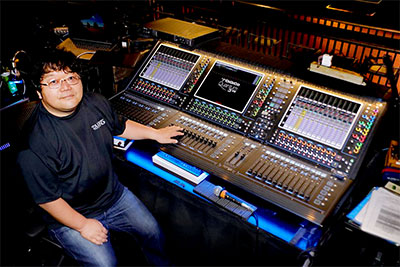 Hosting both domestic and international artists, means that the club sees many visiting engineers each year, so rider friendliness was high on its list of priorities when selecting the front of house console. The team at Umeda Club Quattro conducted extensive research resulting in the Quantum 338’s longevity, processing and sound making it the preferred choice.
‘We had been using the club’s previous console for the last ten years, so we researched manufacturer information very carefully,’ says venue audio manager Kiyokazu Kanda of Take Five Inc, the audio company responsible for hall management across all four Club Quattro venues. ‘Pursuing better sound quality was one of our goals, so the 32-bit SD-Rack cards were a must. The higher bit depth delivers the feel of higher resolution, clarity, and richness. Separation is improved and the sound image feels closer, giving more depth and making it easier to add contrast and shading. This makes it feel like the canvas for placing sounds in space has expanded.’
 The research began in 2023, when Quantum 338s were not widely used in similar venues in Osaka. As many visiting engineers with guest artists, especially international performers, use the in-house console it was important that opinions were taken from a wide range of potential users. The team investigated fully and discovered that many engineers were already familiar with the Quantum 338 and were able to explain features that the Club Quattro team had not yet discovered.
‘We were expecting many more operational questions than we received,’ Kiyokazu Kanda says. ‘In fact, we’ve found ourselves learning routing and other details from touring engineers.
‘Ensuring operators could use their touring show-files was another major factor, but the console is very well thought out, too. Visibility is good and the way it minimizes the number of actions required makes it a great console.’
For a busy venue like Club Quattro, the ergonomic console surface has made a big difference to the engineers’ experience. Seemingly small details like the physical resistance of the encoder knobs means that making fine adjustments in less than ideal working light becomes something you can just feel, keeping engineers’ attention where it needs to be and not focused on the console.
‘The On/Off switch buttons are a comfortable size and feel satisfying to press. When you switch functions, the encoder colours change accordingly, which improves visibility and makes it easy to tell which mode you’re in,’ he adds. ‘For dynamics, you can choose the comp behaviour from Hard/Mid/Soft, so you can avoid the overly aggressive feel common to digital compressors and dial it in precisely. The Gate opens and closes very naturally. It’s so easy to use that you often only need to adjust the threshold and can leave the rest alone, which is a huge help.’
Kanda’s team are sure that this console will remain in great condition for just as long as the previous desk. With built-in future-proofing like Pulse upgrades and the wealth of DMI cards available, there is a range of options to ensure the console with continue to meet engineers’ needs in coming years.
As Mr. Kanda concludes, the venue team’s research has paid off, resulting in cleaner sound, layers of features, more headroom and some very happy visiting engineers.
‘Spice Rack displays graphics in real time, making it easy to see how much effect is being applied, and there are many other useful features,’ he finishes. ‘The TUBE is very useful. For example, if you want to add distortion only to a vocal, you can route the same channel into the ALT INPUT, create distortion with Mustard TUBE, and switch with a Macro or Snapshot. That lets you do it without dedicating an extra channel and you can instantly revert. It’s great that you can handle everything within the console. It makes our work much more enjoyable.’