Neyrinck has announced V-90 Complete, a set of five plug-ins with 24 effects from the Yamaha SPX90.
The 1985 rack processor can be heard on decades of records and was found in live sound racks around the world at the time. V-90 Complete includes the V-90 Symphonic library and adds four new plug-ins – V-90 Pitch Change, V-90 Reverbs, V-90 Reflections and V-90 Modulations.
Like V-90 Symphonic, the new plug-ins are modelled directly from the SPX90 hardware, down to its 31.25kHz sample rate and 12kHz bandwidth. Engineers and players get the same musical, go-to effects the unit is known for, right in their DAW or on a modern live sound system.
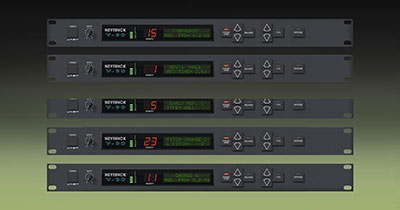 Among user response to the V-90 Symphonic, Pitch Change C was the most requested effect. The SPX90’s stereo micro-pitch doubler has widened vocals and guitars since the 1980s, with its unique character. It is in the V-90 Pitch Change plug-in, along with Pitch Change A, B and D.
The early reflections effects are prized for small and medium spaces that place a sound in a room without washing it out, and for gated and reverse effects. They are also highly sought after by shoegaze guitarists building wall-of-sound guitar. Early Ref. 1 and 2, Gate Reverb and Reverse Gate are all in V-90 Reflections.
The SPX90 was just as much a fixture in live sound as in the studio. Front-of-house engineers relied on it for adding depth and width to bass, drums, and vocals, show after show. The V-90 plug-ins bring those effects to modern live sound systems, including Avid Venue systems through AAX DSP and Fourier Audio’s transform.engine through VST 3. Engineers get the SPX90 sounds they know without carrying the hardware.
‘The response to Symphonic has been wonderful, and nearly every message we got from Symphonic users asked for another SPX90 effect by name,’ says Paul Neyrinck, founder of Neyrinck Audio. ‘Answering those requests was a big task. The SPX90 uses several distinct algorithms across its effects, and each one had to be modelled on its own.
‘I drew on my years of experience in digital signal processing to profile the hardware and recreate how each algorithm really behaves, at the unit’s own 31.25kHz sample rate. Then making those algorithms run on AAX DSP for Pro Tools HDX and Carbon systems was a big challenge of its own.’