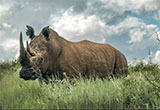
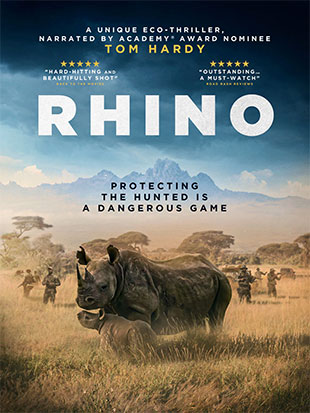
 Screening nationwide in the UK with plans to screen globally, Rhino documentary is the latest documentary from UK filmmaker Tom Martienssen, narrated by Tom Hardy and described by independently-run film website Back To The Movies as ‘hard hitting and beautifully shot’. From the rumbles of rhino calls to the rustling of the grasslands, the film’s soundscape is as critical to the narrative as its visuals.
The documentary follows a group of elite wildlife rangers in Kenya working to protect the critically endangered black rhino. At the heart of the film’s sound capture are Sennheiser MKH 8000 series microphones, which allowed Martienssen and his small production team to capture the environment’s sounds on location even in the toughest conditions Kenya’s wilderness could throw at them.
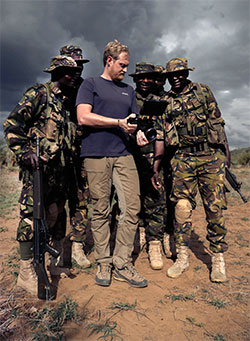
 Martienssen, who formerly worked in Combat Search and Rescue and was a qualified team medic, founded Dustoff Films (the company behind the production) around a decade ago, inspired by his experiences on the frontlines of war and the pressing need for greater environmental awareness. His work quickly evolved to focus on wildlife conservation, with Dustoff Films committed to producing powerful documentaries that tackle critical issues such as climate change, conservation and human rights.
Rhino chronicles the extraordinary recovery of Kenya’s rhino population, which, after facing near extinction in the 1970s, is now thriving thanks to successful conservation efforts. However, this resurgence has come with its own set of challenges – the rhino population has outgrown its habitat, causing territorial disputes and aggression among the animals. In a groundbreaking move, wildlife rangers are now relocating the animals to new areas to ensure their survival and growth. The documentary shines a light on the tireless and dangerous work of the rangers, the positive outcomes of the conservation efforts, and the larger global importance of protecting endangered species.
Filming wildlife is inherently challenging, especially when it comes to sound capture. While the breathtaking visuals often steal the spotlight in wildlife filmmaking, sound is just as essential in creating an immersive experience. ‘We wanted the sound to be real,’ says Martienssen. ‘We didn’t want to recreate wildlife calls or add in anything that wasn’t there in the moment. It was important that the sounds we recorded on location were the ones you’d hear if you were actually there with us, in the middle of the African savanna.’
The MKH 8060, known for its highly directional pickup and clarity, was used throughout the film to isolate sound from specific sources, such as animal calls and rangers’ conversations. Its compact size, sensitivity and climate-proof construction enable its use in the field.
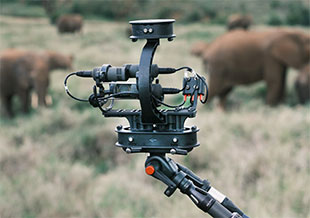
 Martienssen first met Sennheiser’s Tim Constable while giving a lecture on using RED Digital Cinema cameras for storytelling. ‘Our conversation shifted to the film’s sound and that’s when Sennheiser, through Tim, provided us with a double MS stereo rig, featuring two MKH 8040s and one MKH 8030 mic,’ he says. ‘We used this set-up to capture natural ambient sound from each location in the film to create an immersive soundscape.’
‘The 8000 series mics, whether it’s the 8060, 8030, or 8040, all sound very similar, so you can easily mix and match them without any issues,’ Constable adds. ‘The sound profile stays consistent, which meant there was no need for extensive postproduction adjustments. Based on our discussions with Tom, we came up with a solution that worked seamlessly from the start.’
Alongside the MKH 8060, the double MS stereo rig provided another layer of sonic richness, and allowed Martienssen and his team to record spatially immersive sound: ‘We used two main microphone set-ups,’ Martienssen explains. ‘One was an MKH 8060 mounted on the camera, capturing audio wherever the camera pointed. The second involved a boom mic, where we alternated between the double MS stereo rig with two MKH 8040s and an MKH 8030, or just the MKH 8060. We did a side-by-side test with the 8060 we had from the start and another one we got about six months ago. After two-and-a-half years of use, they sounded identical – just like the new one, straight out of the box.’
Before each shoot, they decided which set-up would work best for the specific scene – the MKH 8060 proved good for its directional focus and compact size, while the double MS stereo rig excelled in capturing the full surround sound of a scene by placing it in the middle of the action.
‘We didn’t have the time to swap microphones between set-ups, so we committed to one system per shoot,’ Martienssen continues. ‘We wanted to keep things simple. Instead of the usual set-up with two cameras and one boom mic, we reversed it – we had two MKH 8060 mics, one on the camera and one on a boom following the person I wasn’t filming. This allowed us to capture great sound with a smaller crew, keeping costs down and making it easier to work closely with the rangers without getting in the way.’
Filming in the remote wilderness of Kenya required Martienssen and his team to minimise their footprint and be resourceful with their equipment. ‘Rhino was shot by just two people – I handled the camera, and James May took care of the audio,’ he adds. ‘We did have some support through a trainee scheme with Kenyan film students, which was part of our effort to build resilience in the Kenyan film industry. However, they were only present for planned moments, like the rhino translocation and a few other key events. The rest of the time, it was just James and me.
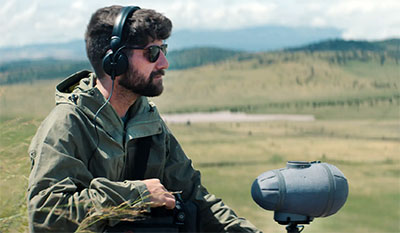 ‘We used Sennheiser HD 25 headphones throughout, especially for James during recording. Many of the situations we were in were dangerous, with a lot of movement around us. We always recorded in 32-bit float to give us a larger dynamic range, so even if James couldn’t react quickly – like if he was running from a rhino – we’d still have clean audio without worrying about overmodulation. The HD 25s were key, offering clear audio while still allowing us to hear what was happening around us, which is crucial when you’re dealing with rhinos.’
Sound Devices MixPre-3 II and MixPre-6 II recorders were also used, giving enough channels for the double MS stereo rig. In line with maintaining a compact yet efficient set-up on the visual side, Martienssen used RED Komodo-X and V-Raptor cameras for shooting, whose preamps he says were surprisingly effective.
‘The amount of dust the camera managed to handle was incredible,’ he recalls. ‘We filmed during Kenya’s worst drought, with rangers driving heavy vehicles that kicked up dust that got into the cameras, audio equipment and microphones. We used a Rycote Softie and Super-Blimp system for the double MS rig, and they did an amazing job protecting everything.
‘Then, when the drought ended, we got torrential rain and mud. Despite all that, the gear held up. I’ve taken these mics to places like Resolute Bay in Canada and Mount Everest at -35°C, and they’ve never let me down. We haven’t had a single issue because all the mics we used are RF condensers, so they’re built for harsh conditions.
 ‘This level of sound design is rare for documentaries, typically being reserved for high-end productions. We committed to it because we wanted the quality of the recording to match the final experience. We wanted to push the boundaries of documentary filmmaking; With Dolby Atmos, the audience is no longer just watching the film – they’re experiencing it. You can hear the rhinos moving behind you, feel the wind whipping through the trees, and become enveloped in the environment. It takes the documentary to a whole new level.’
Martienssen’s background as a BBC journalist and director of photography has shown him how powerful visuals can be in making the audience feel part of the story, but he believes audio can do even more: ‘With headphone technology improving, it’s possible to create a highly immersive experience, even for those viewing on a laptop. They can truly be in the moment, which feels more practical than large-scale set-ups. While only a few hundred people might experience that kind of immersion in person, millions can enjoy it at home with good headphones.’
Towards the end of filming, Martienssen brought editor Cassandra Roberts to Kenya to experience the environment and get a feel for the characters and the reality of the story. She spent three months with the crew, editing on location.
‘I believe this had the biggest impact on the sound of the film,’ Martienssen says. ‘The sounds of the Borana Conservancy, especially, struck her deeply – sometimes more than the visuals. This helped her create an authentic atmosphere when working with our sound mixer, Nas, on the sound to ensure it captured the true essence of the place. We’ve also had a lot of support from various companies including Fujifilm, RED Digital Cinema and P+S Technik, especially since we didn’t have the backing of a studio.’
Nas works at Molinare in Lonon and is, according to Martienssen, a genius: ‘He’s the best sound professional I’ve worked with. I gave him the guidelines, and he truly elevated the mix. I heard the final mix in Molinare’s Dolby Atmos cinema, and it was incredible.’
Looking ahead, Martienssen aims to continue blending high-end cinematic techniques with real-world environmental stories. ‘We want to create eco-thrillers,’ he says. ‘Films that tell real, unscripted stories but with the same level of excitement and narrative drive as big-budget blockbusters. The next project will take that further, with an even bigger budget and more advanced sound and production techniques.
‘Collaborating with Dustoff Films on the Rhino documentary was an incredibly rewarding experience,’ concludes Tim Constable. ‘At Sennheiser, we’re always striving to push the boundaries of sound, and it was inspiring to see how our microphones helped to bring such a powerful story to life. The opportunity to equip Tom and his team with our high-end MKH series allowed them to capture the nuances of this important documentary with exceptional detail. It was a true partnership, and we’re proud to have been part of telling this crucial story of conservation and the majestic rhino.’